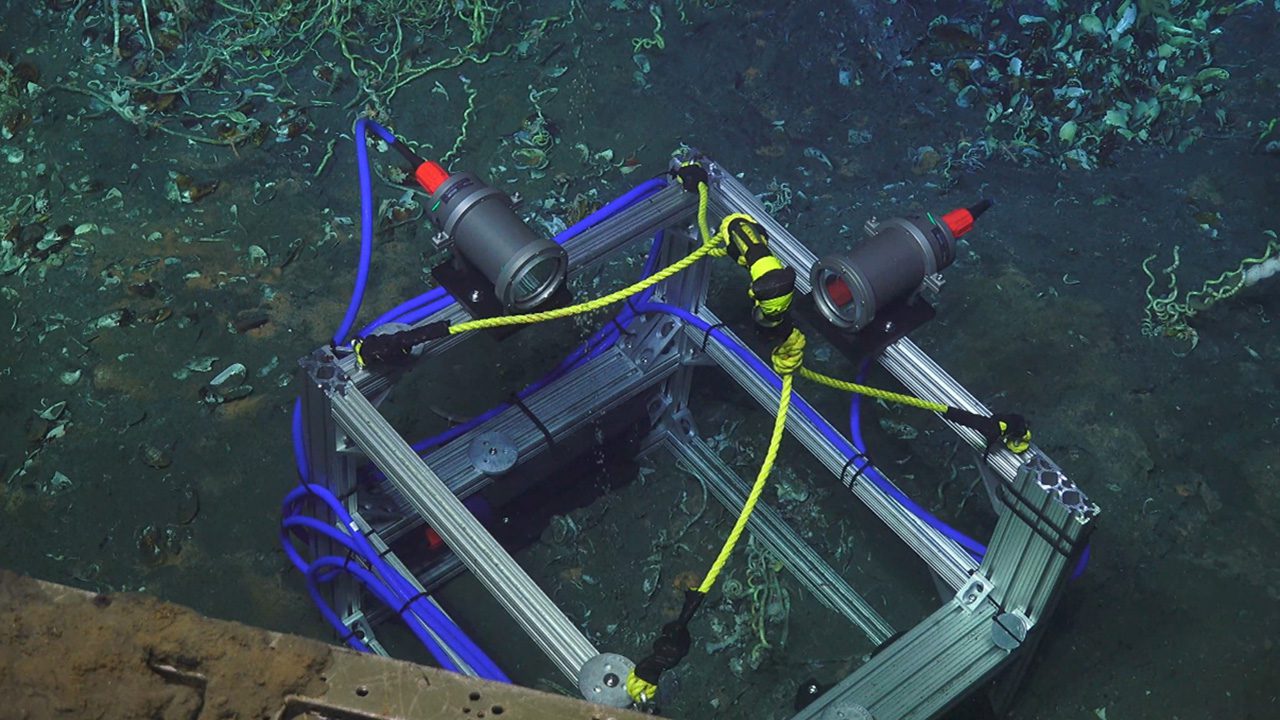
Observing hydrocarbon particles and multiphase flows in submarine seeps – an integrated imaging system
The objective of this project is to develop an integrated imaging system for observing hydrocarbon particles and multiphase flows in submarine seeps. The goal is to create a tool that can simultaneously measure the characteristics of seep bubbles/drops and the surrounding ocean water’s structure, enabling models of bubble fluxes and dispersal. Submarine hydrocarbon seeps release methane and other gases from the seafloor, influencing deep-sea ecosystems, ocean chemistry, and even the atmosphere. Understanding these processes is critical for assessing their environmental impact, especially in the context of global warming and changing ocean conditions. The system aims to provide high-resolution, real-time data to improve predictive models of gas transport and dispersion.
Dr. Binbin Wang’s team has developed the RPiPIV (Raspberry Pi Particle Image Velocimetry) system. which uses a low-cost Raspberry Pi computer, a consumer-grade laser, and a camera to track particle motion underwater. Unlike conventional systems, the RPiPIV can be submerged for live monitoring on the seafloor – aiding in data collection on hydrocarbon seeps.